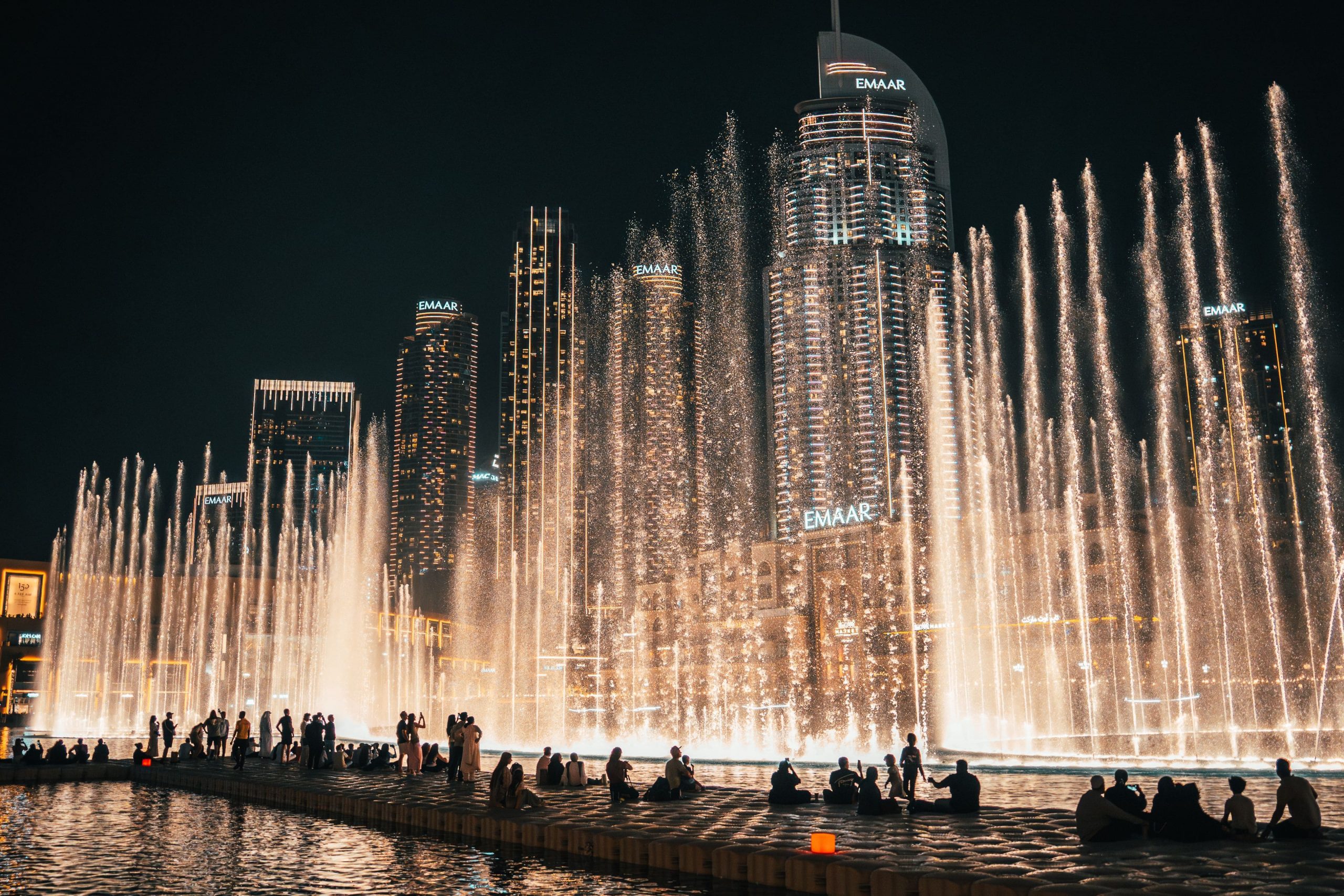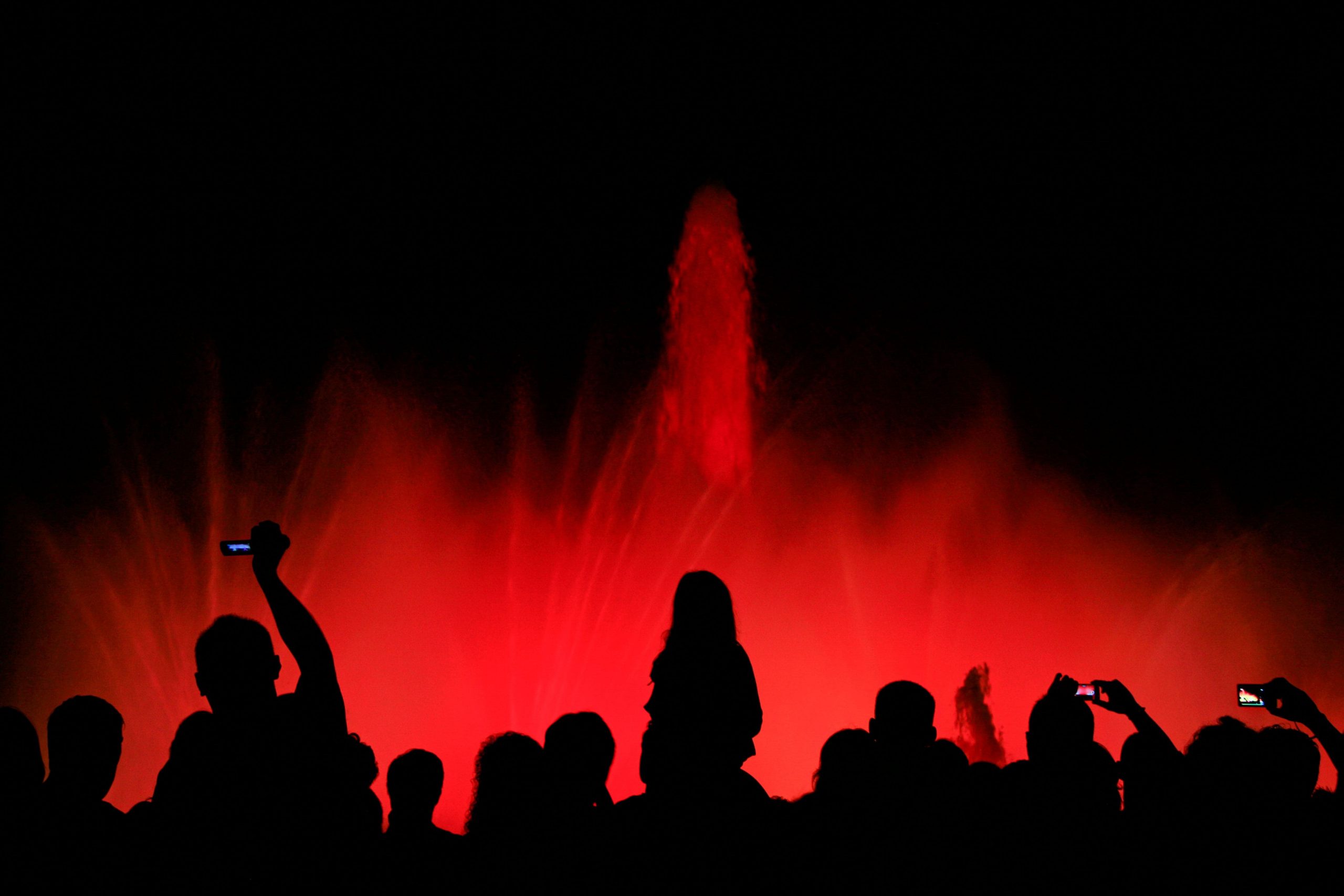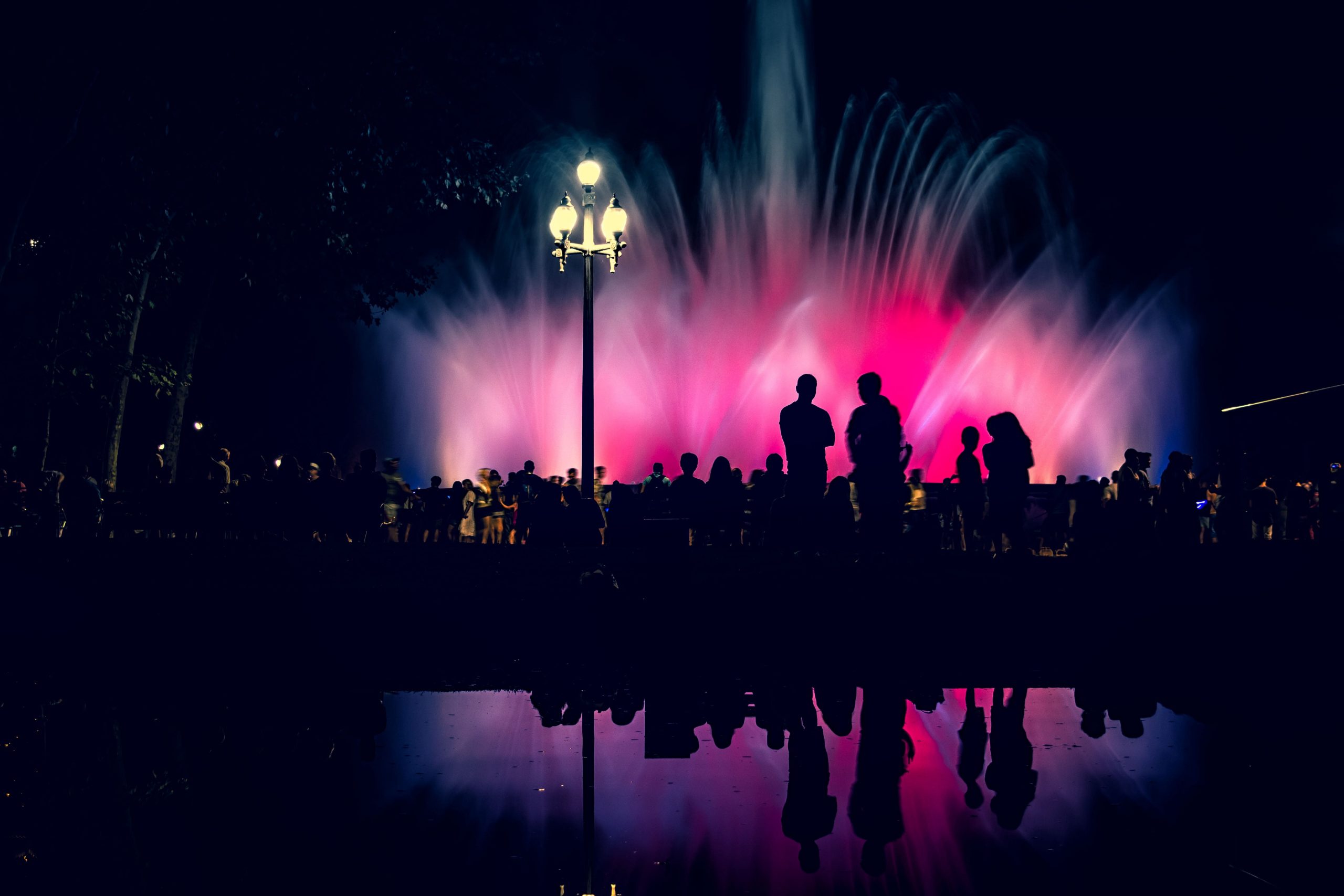
Musical fountains are much more than a simple decorative element. The combination of water, light, music and technology produces experiences that fascinate audiences and transform any space.
However, the success of a musical fountain show does not depend solely on having a good installation. Planning, artistic design and the quality of execution make the difference between an ordinary show and a memorable one.
Below we present the most important points for creating a musical fountain show with the right combination of elements.
How to create a musical fountain show
A great deal of work is required before the water jets of a musical fountain show even start to be programmed. It is a process that begins long before the audience arrives.
A fountain for a public square is not designed in the same way as one for a hotel, a shopping centre or a theme park.
To achieve an interesting show, several aspects must be worked on:
- Music selection.
- Design of the water choreographies.
- Lighting programming.
- Synchronisation through control systems.
- Adaptation to the space and the architecture of the surroundings.
When these elements work together, the result is a visual experience that captures the audience’s attention from the very first moment.
What music to choose for a musical fountain show
Music sets the pace of the entire show. Every variation in intensity, every pause, every crescendo influences the movement of the water and the changes in lighting.
The choice will depend on the project’s objective and the type of audience, although the following options are generally very effective:
- Classical music for elegant and timeless shows.
- Film soundtracks that bring emotion.
- Instrumental music to create relaxing atmospheres.
- Contemporary or popular pieces to attract a broader audience.
- Custom compositions for corporate events or celebrations.
It is also a good idea to use different styles of music when several performances are scheduled in a day, in order to add variety to the show.
It is also important to have the appropriate licences when using works that are protected by copyright.
Scene design and visual choreography for a musical fountain show
Once the music has been selected, the creative process of designing the water choreography begins.
Each scene must follow the rhythm of the music with different water effects:
- Vertical jets of different heights.
- Rotating nozzles.
- Mist or vapour effects.
- Programmed cascades.
- Water arcs.
- High-powered cannons for the most intense moments.
It is recommended that the show be organised like a theatrical work, beginning with an introduction that captures attention and ending with a high point that leaves the audience wanting more.
The different movements prevent the performance from becoming monotonous and ensure that each one is visually interesting for the audience.
What to consider for control and synchronisation technology
Technology allows water, light and music to work together.
Current control systems allow real-time synchronisation of:
- Hydraulic pumps.
- Solenoid valves.
- Dynamic nozzles.
- LED lighting.
- Sound systems.
- Environmental sensors and automation.
Precise programming ensures that every movement of the water is perfectly synchronised with the music and the changes in lighting.
Furthermore, the most advanced systems allow choreographies to be easily changed, new shows to be added or existing ones to be modified without the need to alter the infrastructure.
The reliability of the control system is key to delivering repeated performances with the same quality at every show.
Prioritising stage lighting for a musical fountain show
One of the elements with the greatest visual impact in a musical fountain is the lighting.
In evening performances, light not only helps to better appreciate the water jets, but also adds depth and colour to the show, creating moments that are difficult to forget.
Today, most installations use RGB LED technology, which allows millions of colour combinations and effects.
- Synchronise colour changes with the music.
- Avoid excessively garish colour combinations that distract the audience.
- Use contrasts to highlight the most intense moments.
- Design scenes with smooth transitions that provide continuity.
- Use lighting to highlight the architecture of the surroundings and the structure of the fountain itself.
Good lighting planning makes the water look alive and enhances the visual impact of the show.
Planning is the key to success
Every large-scale musical fountain show is the result of extensive work in design, engineering and art. It is not built in a day.
That is why it is very important to work with specialist professionals who can deliver a project tailored to the venue, the budget and the client’s objectives.
A good show design does not only improve a venue; it attracts people, generates emotions, reinforces the identity of the project and leaves lasting memories in all those who enjoy it.