
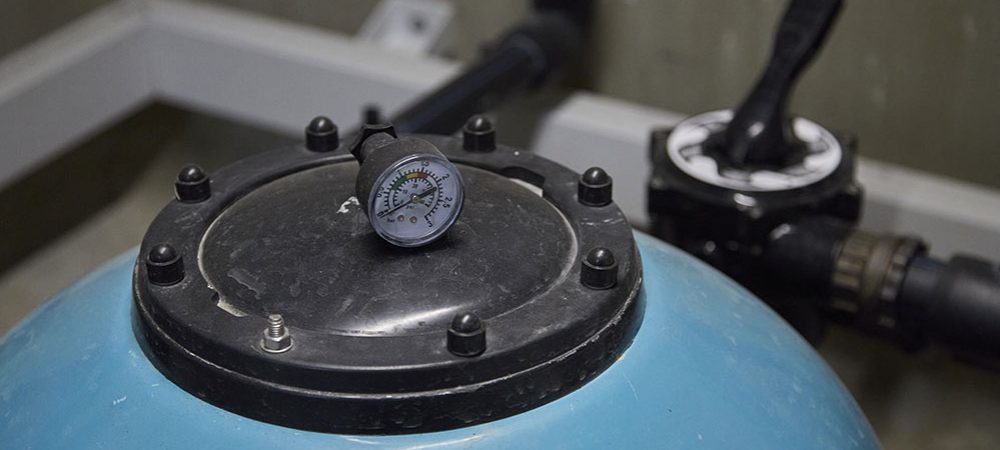
A sand filter is a vital component in all water filtration systems because it is the most effective way to remove suspended solids from water, making it purer and cleaner.
The Buigas Technical Office always uses sand filters in its installations, ensuring the proper operation of the water treatment system for its fountains.
In this post, we will see the purpose of these elements.
What is a sand filter and what is it used for?
A sand filter is composed of a container filled with sand and other very fine grains of carbon and glass, which act as a filtering medium for fluids.
Water enters the filter and passes through the layer of sand, where suspended particles become trapped.
Meanwhile, clean water exits the other side of the filter and returns to the water treatment circuit, ultimately returning to the source connected to the filtration system.
Sand filters are highly effective at retaining very small particles, such as algae, dust, and dirt, which is why they are widely used in industry and residential settings to ensure water safety.
This improves water quality, making it safer and more pleasant for bathing and ornamental purposes.
The wide variety of sand filters available is used in ornamental fountains, swimming pools, drinking water treatment, wastewater treatment, and ponds and aquariums.
Key features of sand filters
Sand filters have several features that make them very popular for installation in recreational and ornamental fountains. Some of these features include:
- Highly effective at retaining small particles.
- Easy to use and maintain.
- Long lifespan.
- Equipped with a control valve.
- Economical when compared to other types of filters.
- Captures contaminating particles and removes sediments.
- Regulates water flow.
How does a sand filter work?
The operation of a sand filter is very straightforward.
- Water inlet: The water to be filtered enters the filter through a main inlet or pipeline.
- Sand layer: Inside the filter, there is a layer of sand placed in the filtration tank. The sand is selected with an appropriate grain size to retain particles while allowing water to flow.
- Filtration: As water flows through the sand layer, suspended particles and contaminants in the water collide with the sand grains and get trapped in the spaces between them. The sand acts as a filtering medium, retaining the particles and allowing cleaner water to pass through.
- Water outlet: The filtered water exits the filter through a secondary outlet or pipeline, ready for use in the next step of the process (e.g., in a pool) or for direct consumption in the case of drinking water treatment.
- Cleaning: Over time, particles accumulated in the sand layer clog the spaces between the grains and reduce the filter’s efficiency. To address this, sand filters require a cleaning process known as “sand washing,” which involves replacing the filter sand.
Types of sand filters
There are various types of sand filters available in the market. Some examples include:
- Laminated sand filter: Made of durable materials like fiberglass-reinforced polyester. It is a very durable filter and resistant to corrosion.
- Blown sand filter: Made of plastic through a process called blowing. It is more economical than laminated filters but less durable.
- Cartridge filter: Uses cartridges instead of sand as the filtering medium. This type of filter is easier to maintain than sand filters but less effective at retaining small particles.
How to know if the sand filter is working properly?
There are several signs that indicate the sand filter is functioning correctly and the water in the system is clean and clear:
- No visible suspended particles in the water.
- The filter pressure remains constant and does not increase over time.
If you notice that the water is cloudy or contains suspended particles when it exits, the filter may not be functioning as it should. In such cases, you need to perform filter maintenance or call a professional to inspect it.
Without a doubt, water filters are indispensable elements to ensure water cleanliness in ornamental fountains, lakes, ponds, water features, water curtains, and treatments to improve water quality.